Sep 13, 2026
Senior Mobility Product Trends & R&D Roadmap (2026–2030)
Discover 5 evidence-based senior mobility product trends for 2026–2030. Practical B2B manufacturing insights, regulatory shifts (EU/US), and R&D roadmaps for importers.
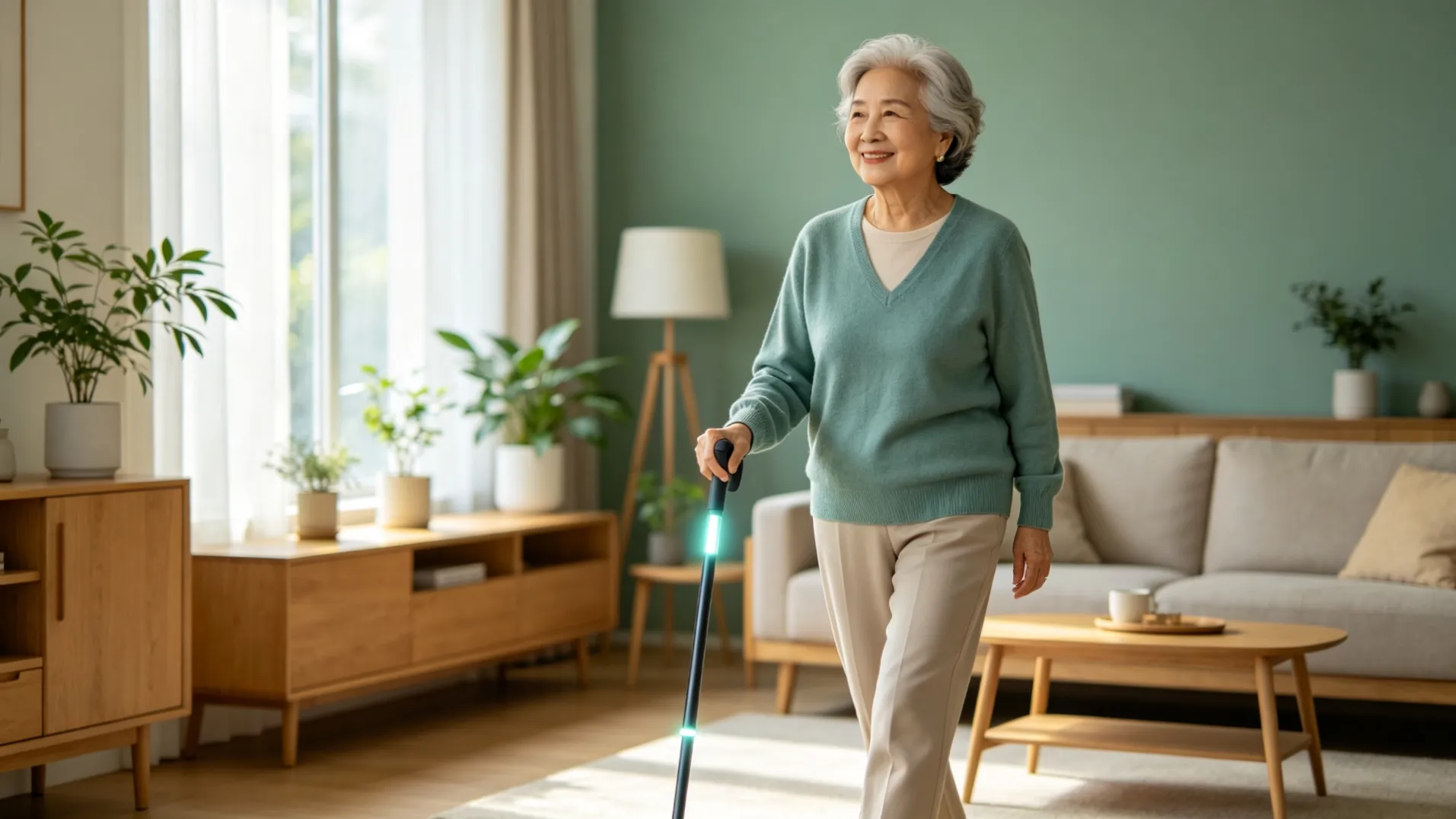
After attending major global healthcare expos and speaking directly with over 200 mobility aid importers and nursing facility buyers across Europe and North America, one clear reality has emerged: the traditional homecare equipment market has fundamentally shifted.
Heavy, clinical-looking steel wheelchairs and utilitarian commodes are no longer competitive. Driven by UN aging data, tightening EU accessibility mandates, US Medicare reimbursement shifts, and an acute global caregiver shortage, today’s end-users demand lightweight, aesthetically pleasing, smart, and dignified solutions.
Below is an analysis of five regulatory-backed market trends reshaping our industry, along with actionable product development steps for OEM/ODM manufacturers and brands looking to stay ahead between 2026 and 2030.
1. Ultra-Lightweight Composites Are No Longer Optional
The Regulatory & Market Driver
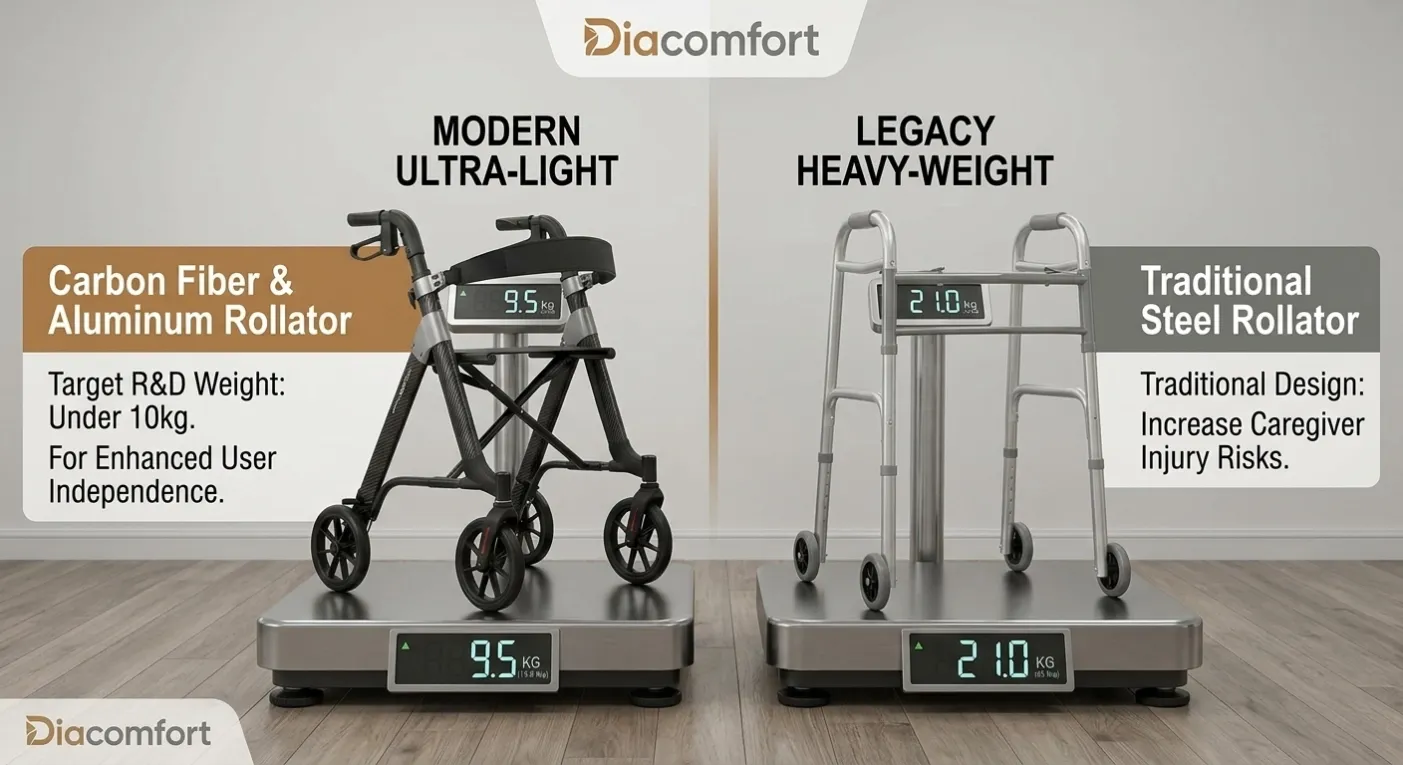
According to the WHO Global Report on Assistive Technology, nearly 78% of elderly users abandon traditional mobility devices simply because they are too heavy to lift independently. Furthermore, modern EU and US institutional buyers are actively filtering out heavy steel frames to protect healthcare staff from back injuries during patient transfer.
Why This Shift Is Irreversible
- User Independence: A traditional 18–22 kg steel wheelchair restricts mobility. An ultra-light 8–12 kg frame allows seniors to load their own gear into a car trunk.
- Freight Optimization: Rising sea freight makes shipping heavy steel inefficient. Lighter materials yield significantly higher units per 40HQ container, lowering landed cost per unit for distributors.
R&D Roadmap for Manufacturers
- Material Upgrades: Transition civilian home-use models from Q235 steel to 6061-T6 aviation aluminum or T700 carbon fiber. Target a total dry weight under 7 kg for rollators and under 13 kg for power chairs.
- Structural Integrity: Ensure weight reduction does not compromise safety. Maintain compliance with ISO 7176 standards for static and dynamic stability (minimum 125 kg safe working load).
- Compact Folding Mechanisms: Design single-hand, one-second folding structures tailored for active elderly users.
2. Non-Intrusive, Passive Fall Detection as a Built-In Feature
The Regulatory & Market Driver
Initiatives like Singapore’s Healthier SG program and European smart-aging grants are funding non-wearable fall monitoring systems. Industry data shows over 40% of senior falls result in temporary loss of consciousness—rendering traditional "push-button" SOS pendants useless.
Why This Shift Is Irreversible
- Privacy Concerns: Camera-based room monitoring faces strict opposition under EU GDPR laws.
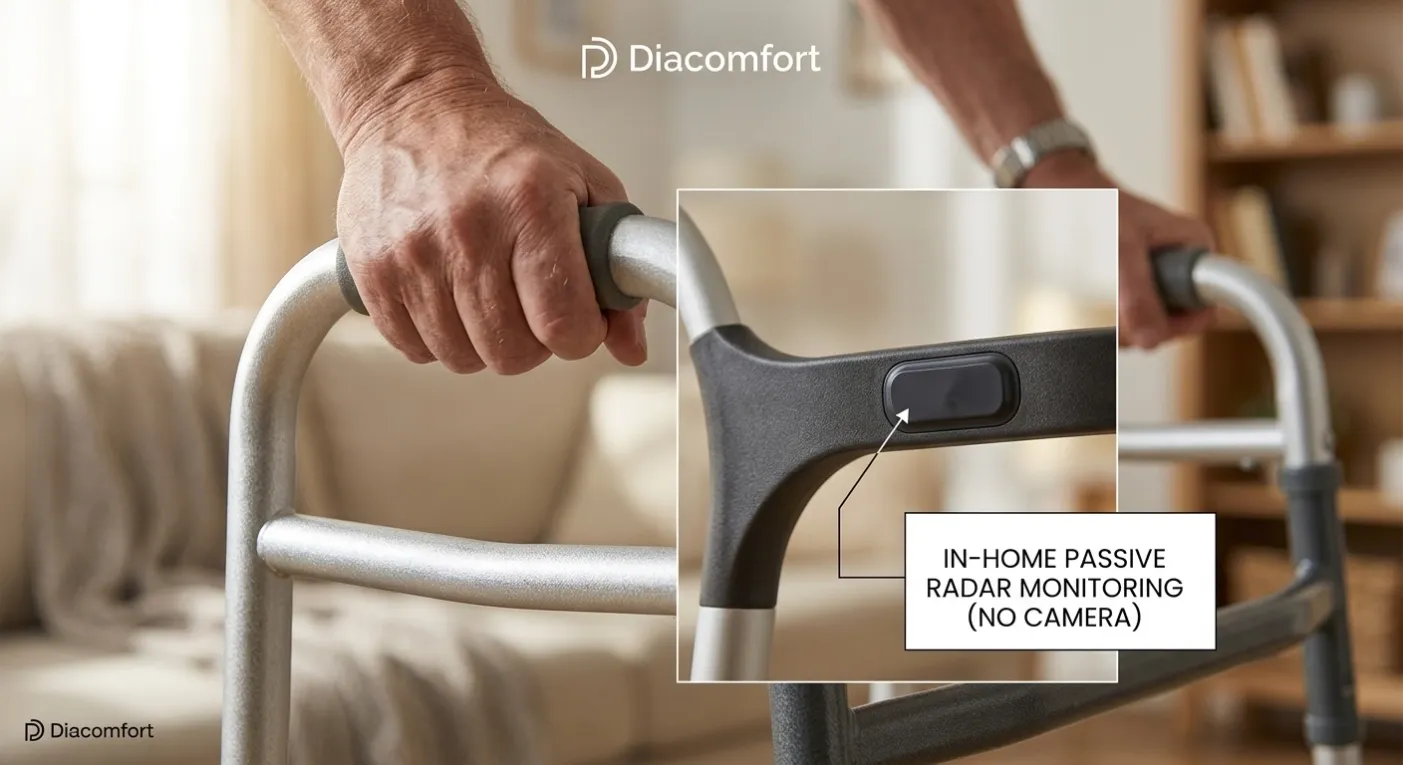
- Radar Dominance: Millimeter-wave radar (mmWave) provides 24/7 fall detection without capturing personal imagery, making it the preferred standard for senior living facilities.
R&D Roadmap for Manufacturers
- Integrated Sensing: Embed micro-mmWave radar chips directly into walker frames, nursing beds, or bathroom safety rails.
- Zero-Learning Curve: Keep the end-user interface dead simple. Avoid requiring smartphone app interactions for elderly users; push automated alerts directly to caregiver handsets or facility dashboards.
- GDPR Compliance by Design: Process data locally on the edge device rather than uploading raw video feeds to the cloud.
3. The End of "Hospital Gray": Furniture-Grade Aesthetics
The Regulatory & Market Driver
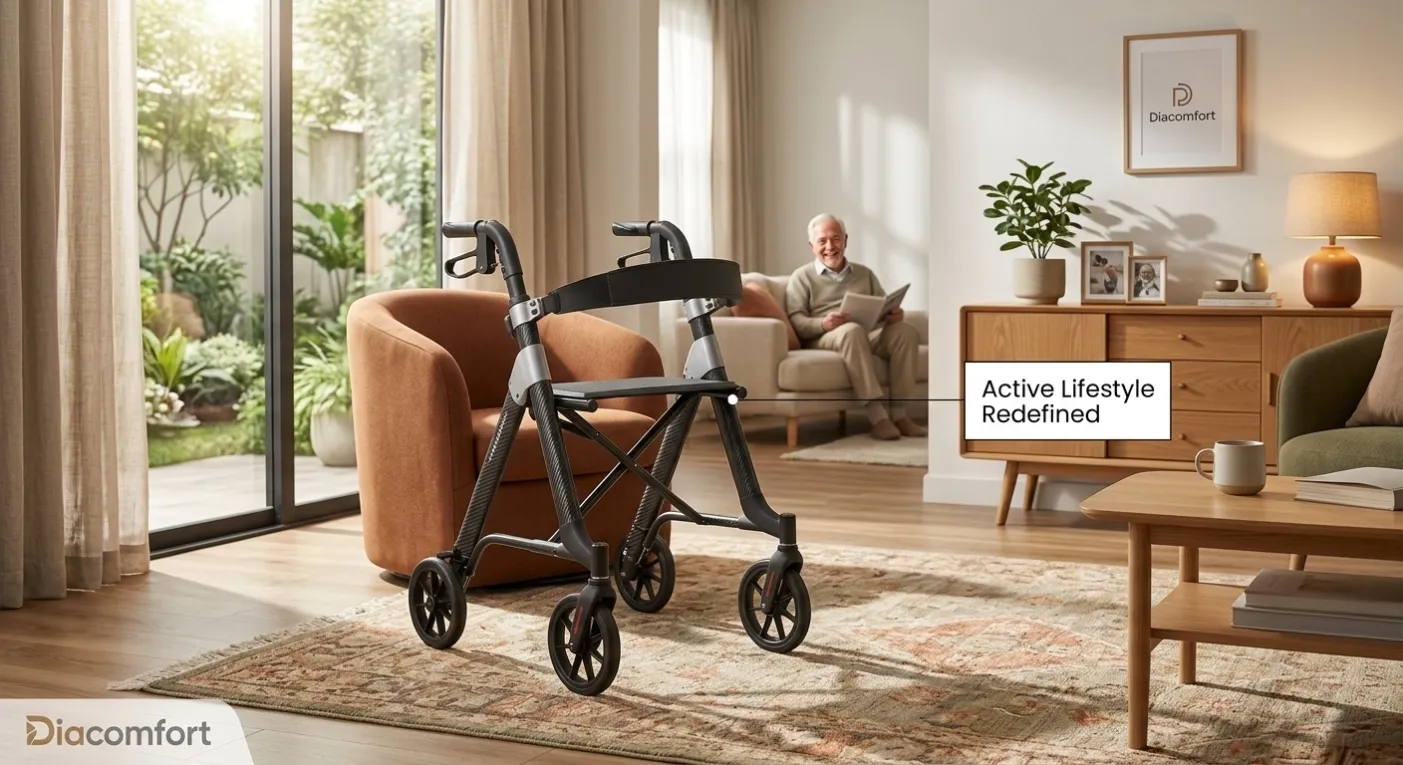
Both the EU Accessibility Act and US ADA guidelines emphasize reducing the social stigma associated with assistive devices. A global survey revealed that over 60% of seniors delayed purchasing needed mobility aids simply because the products looked "too sick and clinical."
Why This Shift Is Irreversible
Seniors today want home medical equipment that blends into modern interior décor. High-end residential care homes also demand products that create a warm, residential ambiance rather than an institutional hospital feel.
R&D Roadmap for Manufacturers
- Color & Texture Overhaul: Replace cold, industrial gray powder coating with warm neutral tones (matte champagne, warm beige, soft olive, or textured wood-grain transfers).
- Concealed Hardware: Enclose exposed cabling, brake wires, and bulky joint welds inside streamlined tubular frames.
- Dual-Purpose Design: Develop hybrid products—such as commode chairs that double as elegant Scandinavian-style bedroom armchairs when capped with customized fabric covers.
4. Target-Specific Adaptations for Chronic Conditions (e.g., Diabetic Foot & Arthritis)
The Regulatory & Market Driver
With over 537 million adults living with diabetes globally, diabetic peripheral neuropathy and circulation issues are leading causes of mobility loss. Specialized geriatric clinics now explicitly mandate pressure-relief and joint-friendly ergonomics in procurement tenders.
Why This Shift Is Irreversible
Generic "one-size-fits-all" wheelchairs cannot address micro-climate heat, skin shear forces, or joint pain. Purpose-built medical adaptations command higher profit margins and build long-term brand loyalty with medical buyers.
R&D Roadmap for Manufacturers
- Pressure-Relief Seating: Integrate multi-layer memory foam and high-density gel cushions designed specifically to prevent decubitus ulcers (bedsores).
- Arthritis-Friendly Controls: Replace small, hard-to-pinch adjustment pins with large, soft-touch lever locks and ergonomically angled palm-rest grips.
- Diabetic Footwear Integration: Offer customized heel-relief footrests with smooth, seamless edges to prevent skin abrasions.
5. Modular, Circular-Economy Ready Construction (EU 2027 Standards)
The Regulatory & Market Driver
The EU’s upcoming Circular Economy Action Plan mandates that medical and assistive equipment imported into Europe must feature modular designs, allowing for easy disassembly, component replacement, and high recyclability rates.
Why This Shift Is Irreversible
Institutional buyers and Nordic public healthcare tenders now evaluate Total Cost of Ownership (TCO). Products that must be entirely discarded due to one broken wheel arm are being systematically disqualified.
R&D Roadmap for Manufacturers
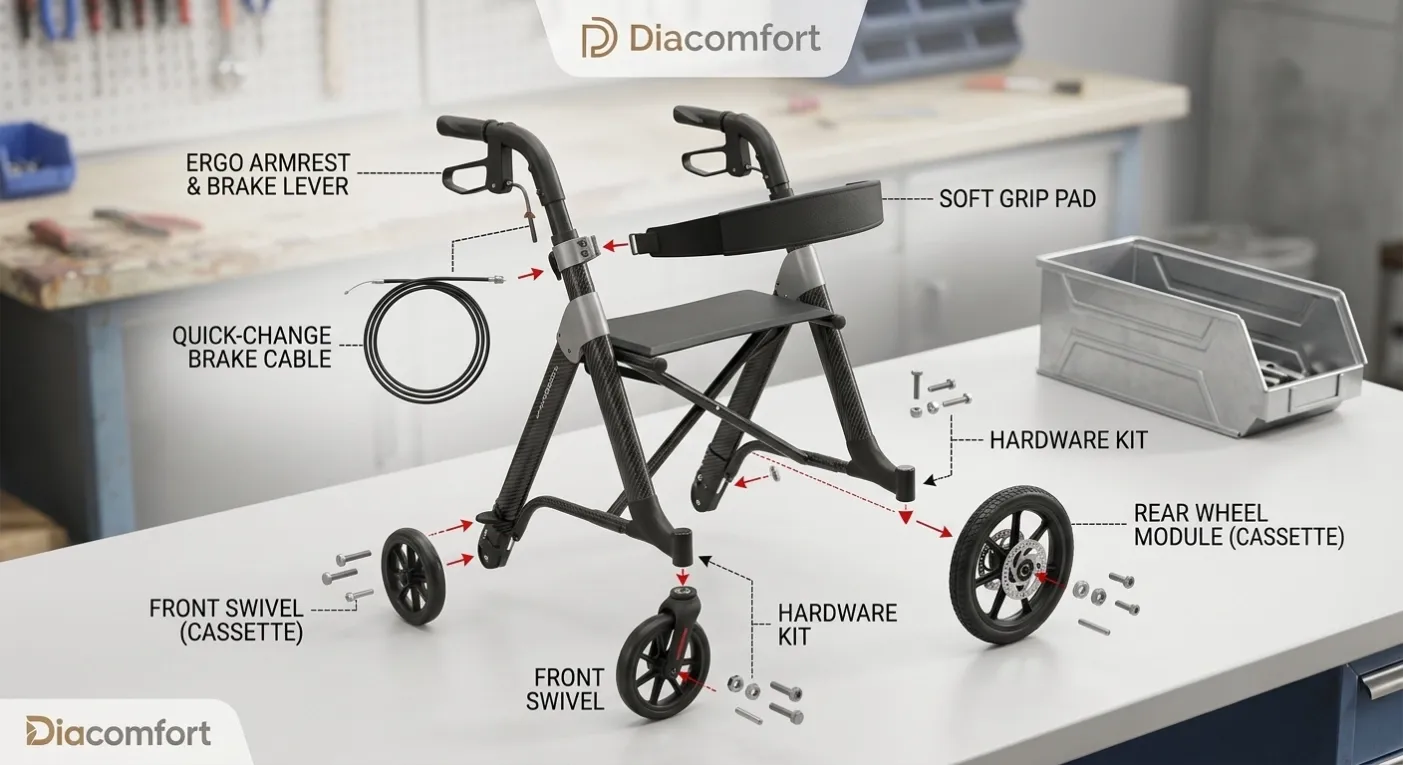
- Standardized Components: Modularize high-wear parts (castors, brake pads, armrest pads, and seat upholstery) across your product lines using universal fast-release mechanisms.
- Adhesive-Free Assembly: Transition from permanent glue bonding to mechanical fast-fasteners to simplify end-of-life recycling.
- Spare Parts Documentation: Supply B2B distributors with clear exploded-view diagrams and digital spare-parts ordering catalogs.
Summary & Action Plan for B2B Importers
The global senior care sector is evolving rapidly from low-cost, generic medical hardware toward lightweight, aesthetically refined, privacy-compliant, and modular solutions.
To remain competitive over the next five-year cycle, manufacturing platforms and importers must prioritize five core benchmarks:
- Weight Optimization: Shift to aerospace-grade aluminum and carbon fiber.
- Passive Safety: Incorporate non-intrusive radar fall detection.
- Dignified Design: Adopt warm, furniture-integrated industrial design.
- Clinical Niche Focus: Target chronic condition pain points like pressure sores and joint pain.
- Eco-Modularity: Build easily repairable structures aligned with EU ESG standards.
Frequently Asked Questions (FAQ)
Q1: What are the fastest-growing senior care product categories for export in 2026?
Ultra-lightweight carbon fiber rollators, Scandinavian-style home commode chairs, and smart nursing beds featuring integrated passive fall detection are seeing the highest year-over-year import demand.
Q2: How do lightweight materials like carbon fiber impact B2B shipping economics?
While raw material costs are higher, carbon fiber frames cut unit weight by 40–50%. This allows higher stacking density, reduced gross shipping weight, lower import tariffs in certain regions, and significant savings on international sea and land logistics.
Q3: What certifications are mandatory for exporting modern mobility devices to Europe?
In addition to standard CE marking under the EU Medical Device Regulation (MDR 2017/745), manufacturers must comply with ISO 13485 quality systems, ISO 7176 / ISO 11199 product testing, and upcoming EU Circular Economy repairability guidelines.