Sep 8, 2026
How to Choose the Right Wheelchair for Seniors: A Complete Buying & Sourcing Guide
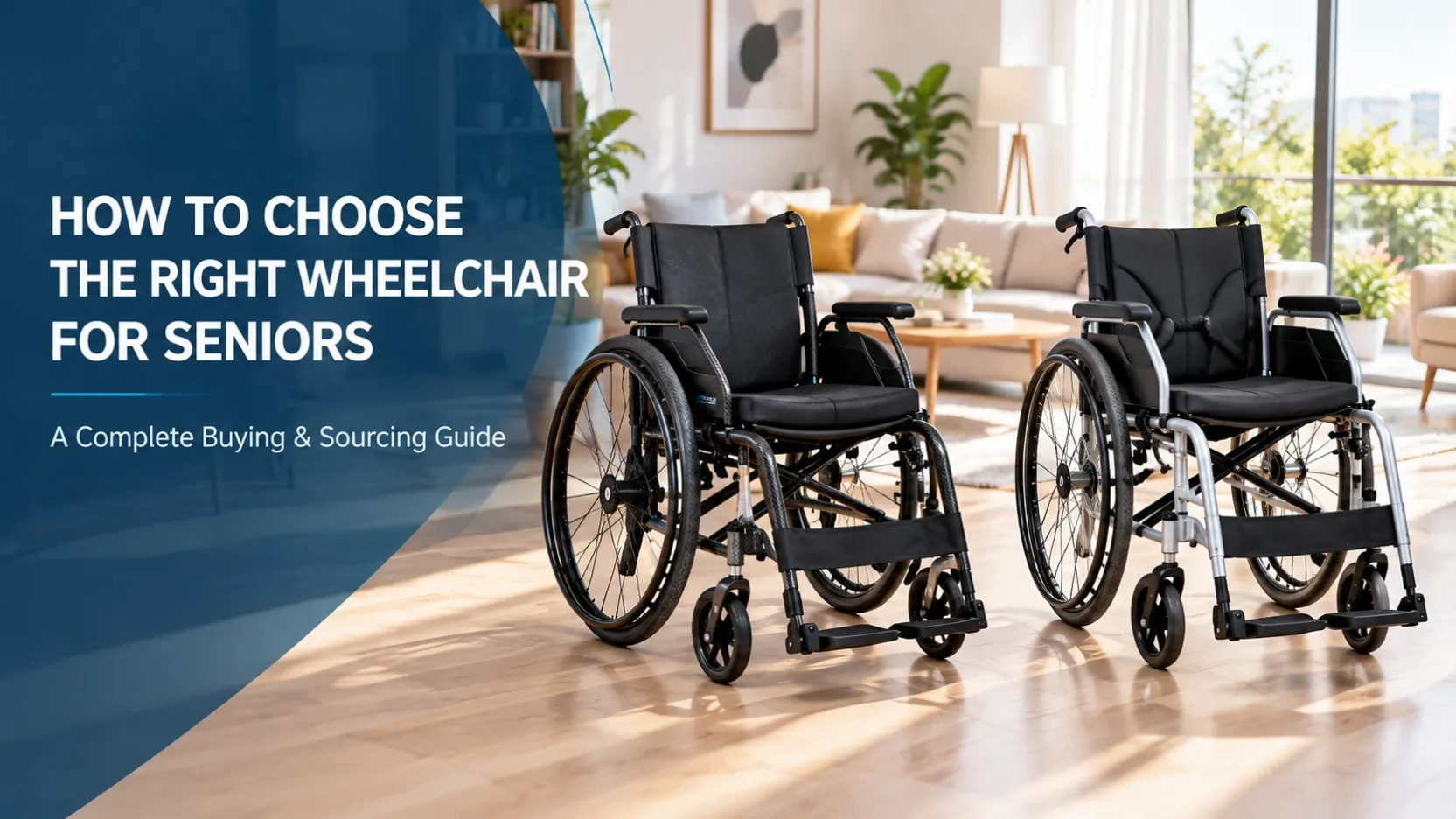
Choosing the right wheelchair for an elderly loved one or institutional facility is one of the most critical decisions in senior mobility care. The ideal wheelchair must balance user body conditions, daily usage scenarios, frame materials, and structural ergonomics to ensure independence, safety, and long-term comfort.
In this comprehensive guide, we break down everything you need to know—from structural materials to specific physical needs—to help families, healthcare distributors, and senior care procurement teams select the perfect mobility solution.
How to Select the Ideal Senior Wheelchair
If you are looking for a swift decision guide, match the senior's situation with these core factors:
- For Active Seniors / Frequent Travel: Choose an ultra-lightweight aluminum alloy or carbon fiber manual wheelchair with quick-fold mechanics.
- For Seniors with Limited Upper Body Strength: Opt for a lightweight electric power wheelchair with an intuitive joystick controller.
- For Bedridden or Severely Disabled Patients: Select a high-back reclining wheelchair with head support, elevatable leg rests, and anti-tippers.
- For Indoor / Tight Space Navigation: Pick a narrow-frame transport chair with smaller rear wheels and flip-up armrests for easy side transfers.
1. Wheelchair Materials & Construction: Aluminum, Carbon Fiber, or Steel?
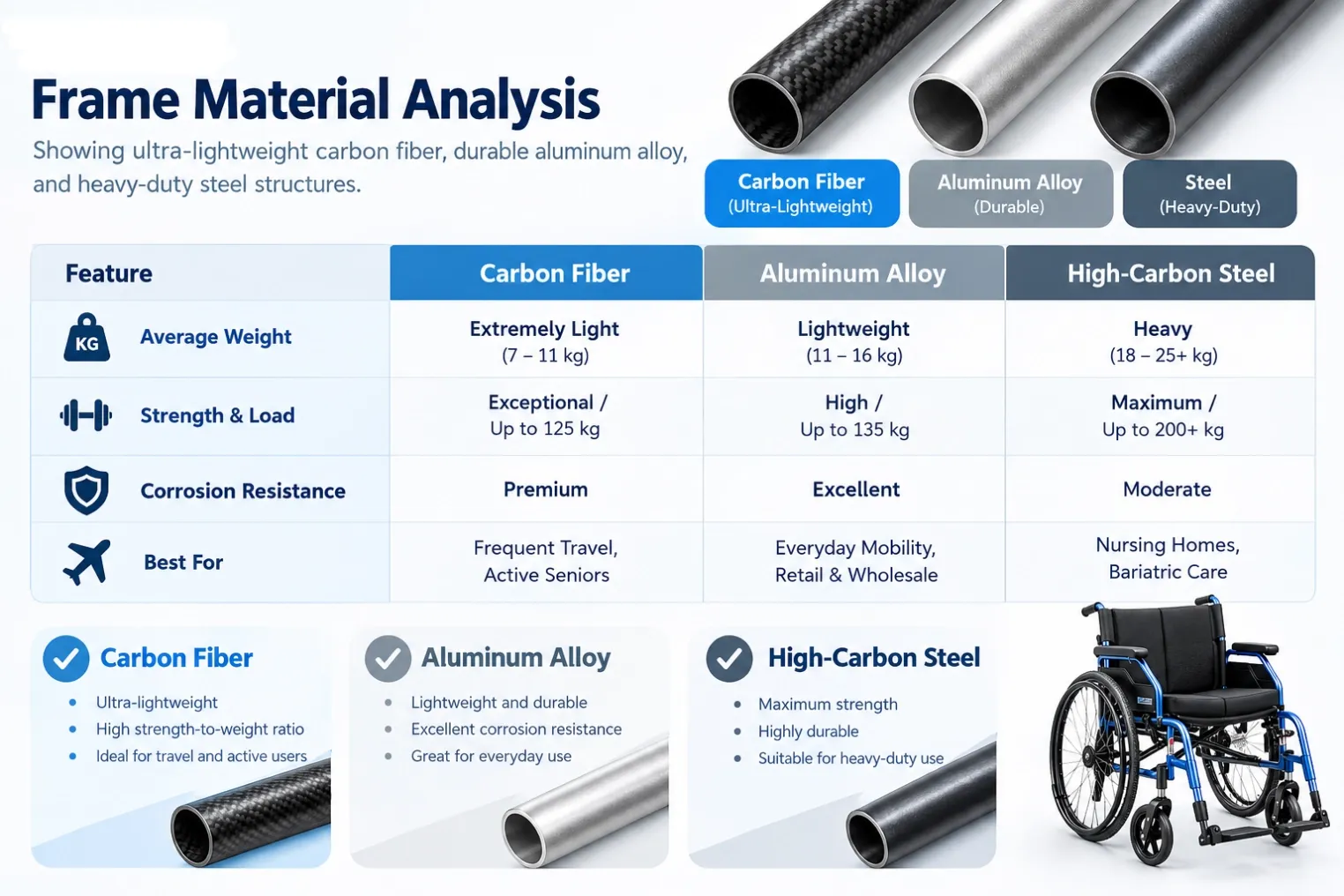
The structural frame material directly determines the wheelchair’s weight, durability, load capacity, and price point. Understanding these materials helps buyers evaluate long-term value.
Key Anatomical Components to Inspect:
- Seat & Backrest Cushioning: High-density memory foam or breathable honeycomb mesh prevents pressure sores during prolonged sitting.
- Wheel Types (Pneumatic vs. Solid PU): Solid Polyurethane (PU) tires require zero maintenance and cannot puncture, making them ideal for institutional use. Pneumatic air tires offer superior shock absorption for outdoor terrain.
- Brake Systems: Dual braking controls—including user handbrakes and companion push-handle brakes—ensure total safety on inclines.
2. Matching Wheelchair Types to Physical & Medical Conditions
A senior's mobility level and clinical requirements dictate the necessary wheelchair features.
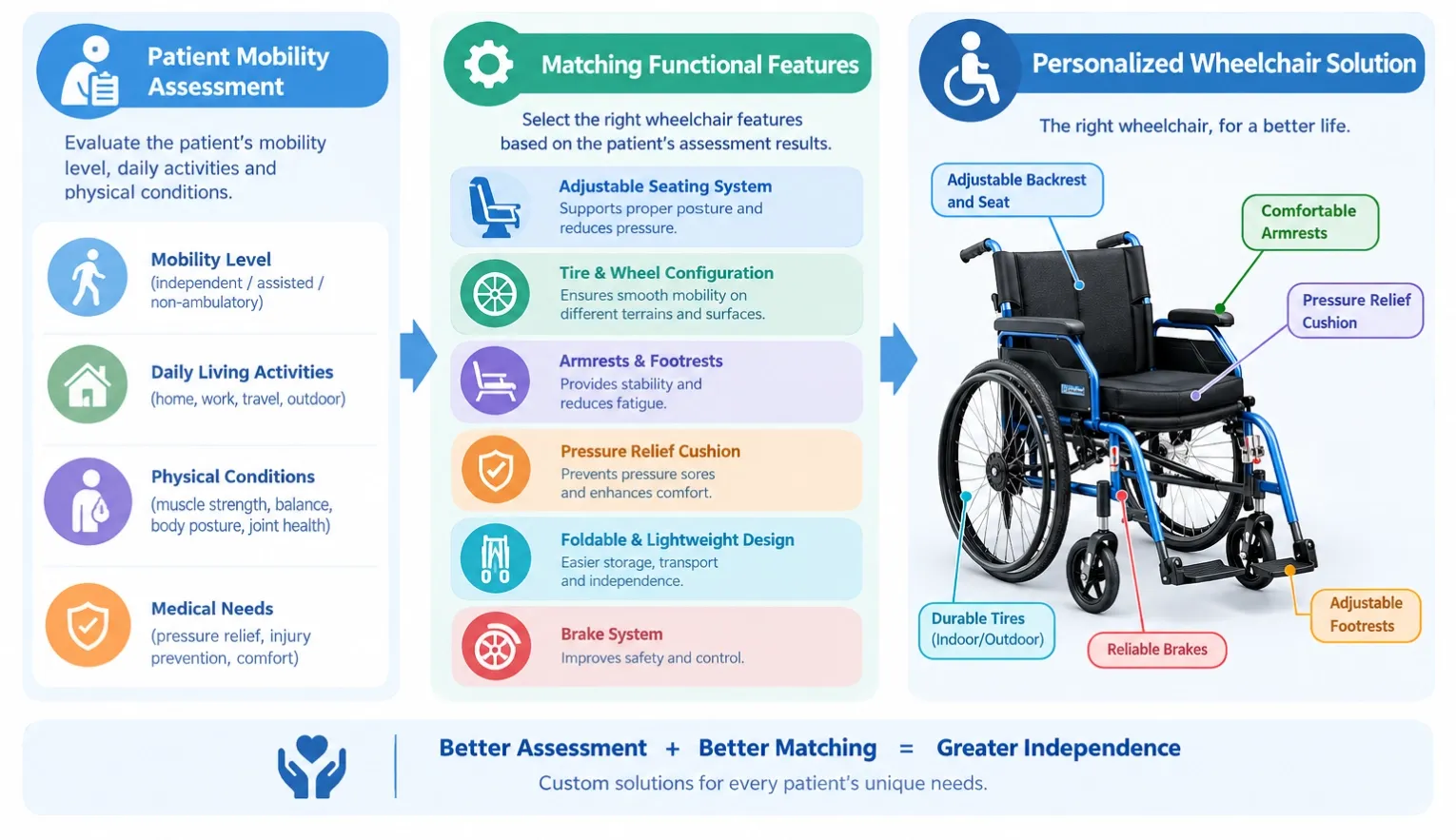
Scenario A: Seniors with Upper Body Strength & Good Balance
- Recommended Type: Self-Propelled Manual Wheelchair
- Why it works: Large rear wheels (22–24 inches) with hand rims allow elderly users to propel themselves independently, exercising upper body muscles while keeping active.
Scenario B: Seniors with Low Muscle Strength or Fatigue
- Recommended Type: Foldable Electric Power Wheelchair
- Why it works: Equipped with brushless motors and lithium-ion batteries, smart power wheelchairs allow effort-free navigation across parks, shopping malls, and ramps using a 360-degree joystick controller.
Scenario C: Post-Stroke, Post-Surgery, or Postural Instability
- Recommended Type: Reclining High-Back Wheelchair with Headrest
- Why it works: Full backrest recline (from 90° to 180°) allows users to rest comfortably without transferring to a bed. Adjustable lateral supports help maintain proper spinal alignment.
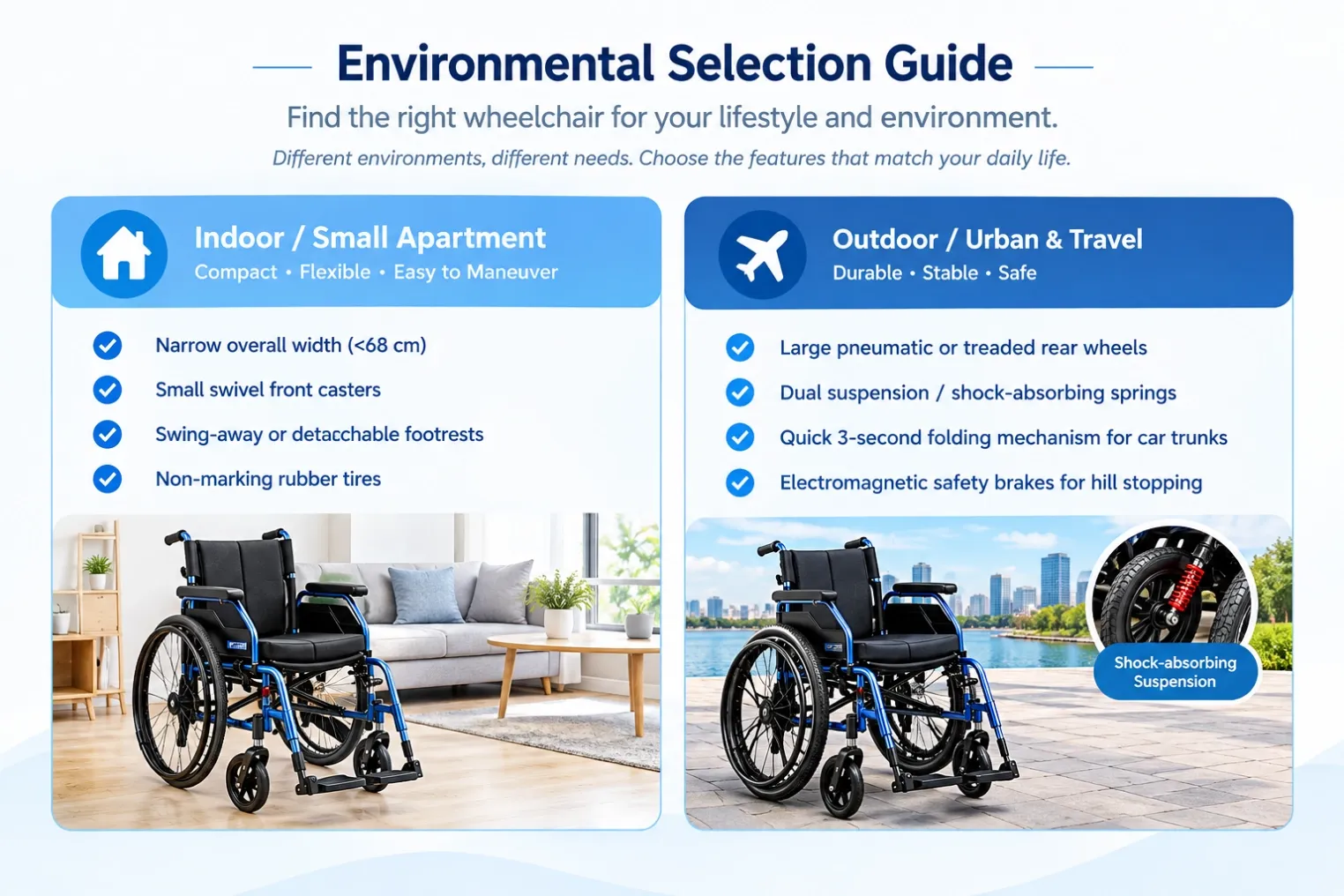
3. Usage Scenarios: Indoor Home Use vs. Outdoor Travel
Where will the wheelchair be used most often? Defining the primary environment prevents purchasing mismatched equipment.
4. Solving Real-World Caregiver & User Challenges
Standard wheelchairs often fail to address specific daily friction points. Here is how modern engineered wheelchair solutions overcome these challenges:
- Challenge 1: Difficulty Transferring to Beds or Toilets
- Solution: Choose wheelchairs with flip-up armrests and swing-away leg rests. This allows seamless side transfers directly onto beds, sofas, or bathroom commodes without lifting hazards.
- Challenge 2: Heavy Lifting Strain on Caregivers
- Solution: Switch to aircraft-grade aluminum or carbon fiber frames. Weighing under 12 kg, caregivers can effortlessly lift and load the wheelchair into car trunks.
- Challenge 3: Risk of Tipping Over on Ramps
- Solution: Ensure the unit includes anti-tip rear wheels and an adjustable center of gravity.
Explore Custom & Wholesale Senior Mobility Solutions with Diacomfort
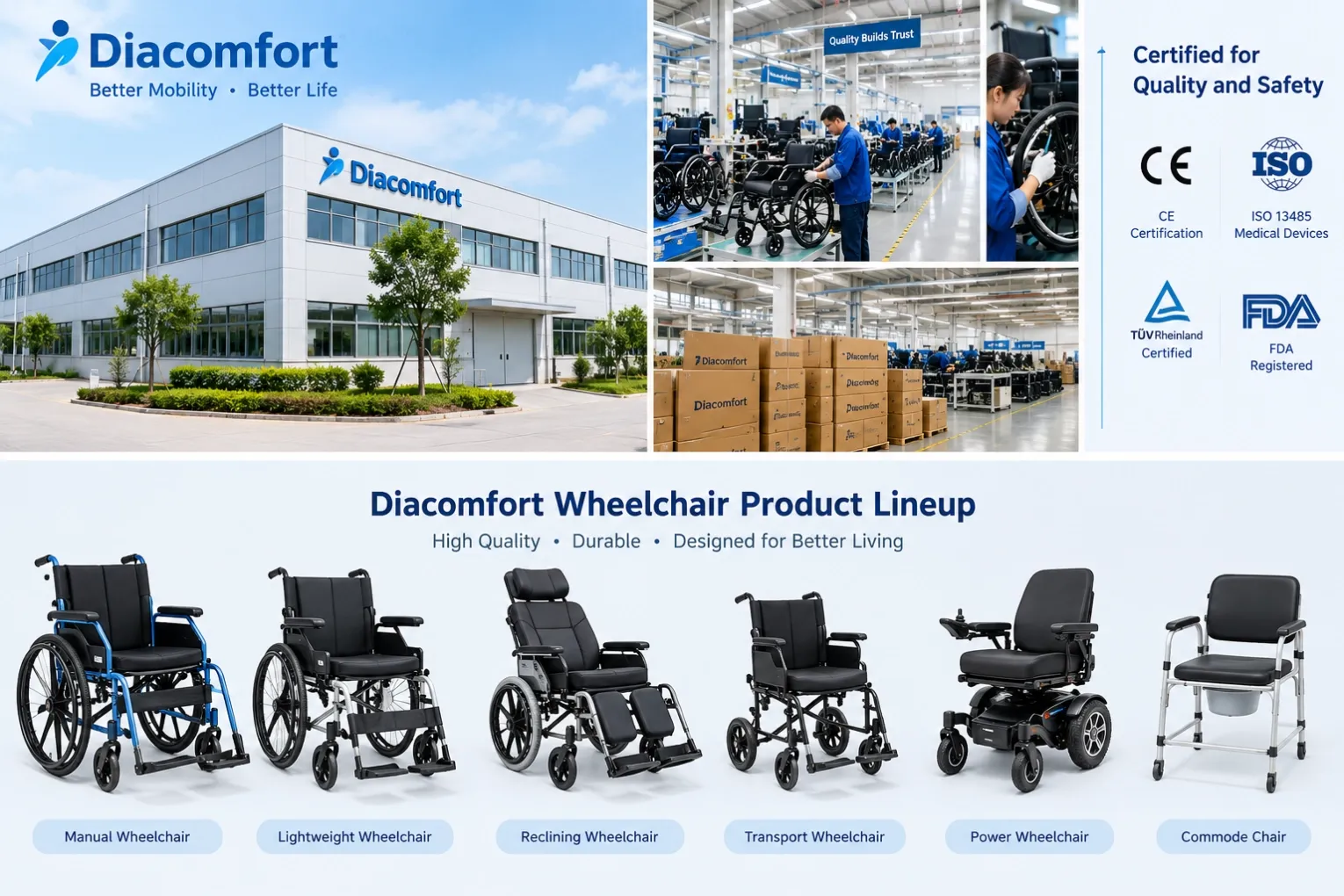
Finding the perfect balance of comfort, safety, and durability requires a trusted manufacturing partner. At Quanzhou Diacomfort Health Industry Co., Ltd., we design and manufacture a wide range of senior mobility aids, medical wheelchairs, and healthcare hardware tailored for global B2B distributors, medical stores, and care institutions.
Whether you need ultra-lightweight carbon fiber wheelchairs, heavy-duty nursing home models, or custom OEM/ODM solutions, our engineering team is here to support your requirements.
Partner with Diacomfort Today
Contact our export specialists to request a product catalog, sample testing, or wholesale quotation:
- Official Website: www.diacomforthealth.com
- Explore Products: View Our Full Mobility Aids & Wheelchair Catalog
- Export Sales Manager: Manager Zhang
- Phone / WhatsApp: +86 15060192972
- Corporate Address: Rooms 1412-1417, 13th Floor, Donghai Taihe Square, Fengze District, Quanzhou, Fujian Province, China