Sep 30, 2026
ACTIVE-STEP AFO for Foot Drop After Stroke: Sizes, Materials & What to Ask Before You Order
Lightweight AFO for foot drop: 70-degree bionic hinge, open sole, adjustable support, sizes S-M (EU 35-44), <380 g, OEM/ODM from DiaComfort Health.
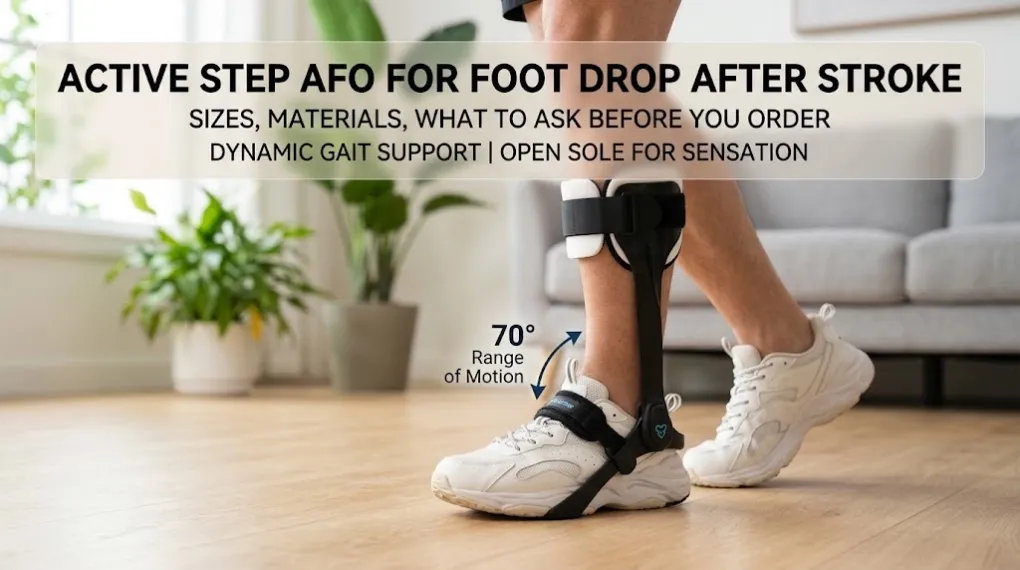
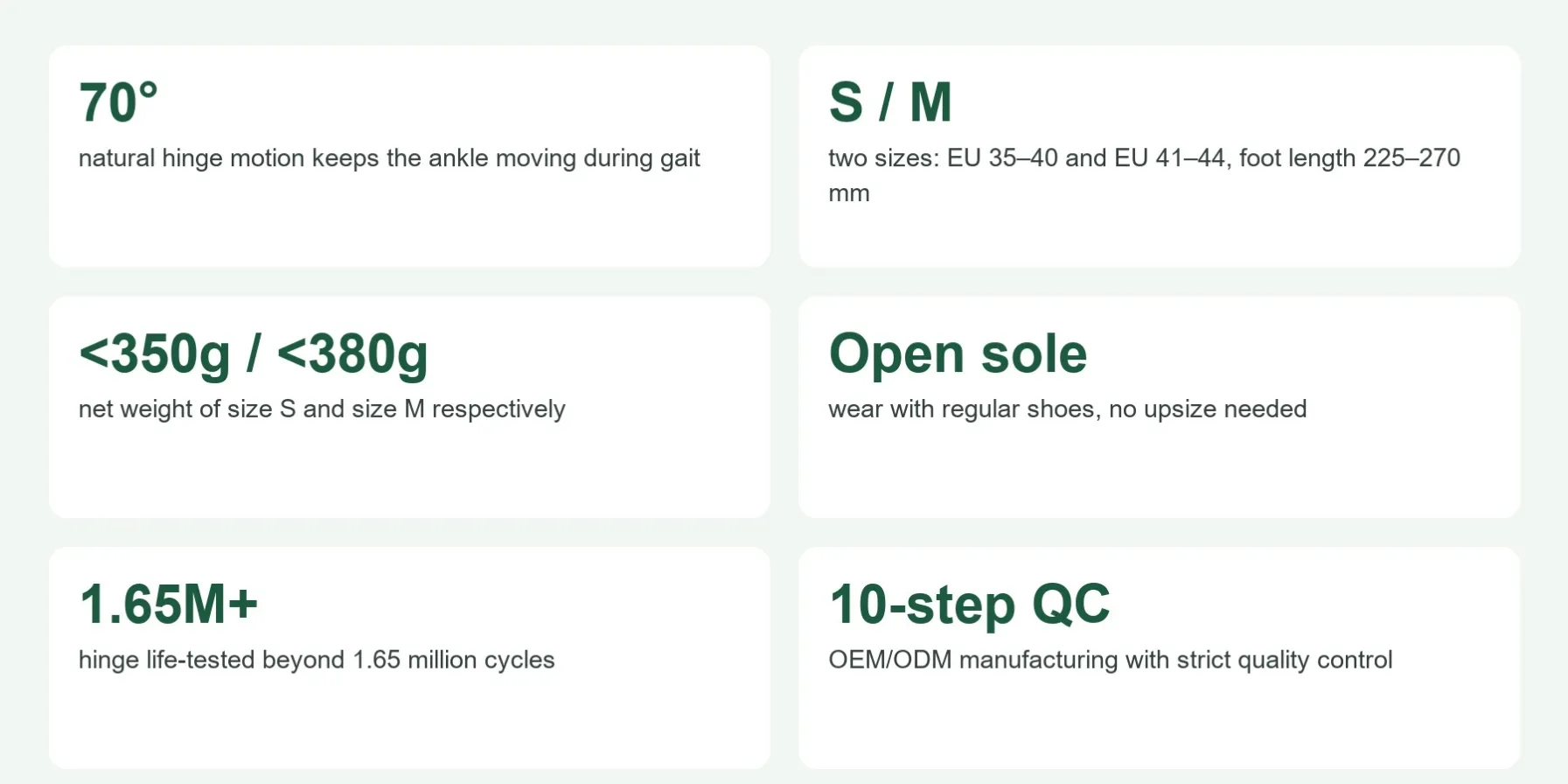
The ACTIVE-STEP AFO is a lightweight bionic ankle-foot orthosis for people with foot drop, stroke hemiplegia, peroneal nerve injury and related ankle dysfunction. It is developed and exported by DiaComfort Health (Quanzhou Diacomfort Health Industry Co., Ltd.), a rehabilitation and senior-care manufacturer with in-house R&D and production. The orthosis comes in two sizes (S fits EU 35–40, M fits EU 41–44), weighs under 350 g (S) or 380 g (M), and is built from a high-strength composite shell with a skin-friendly elastic fabric. This guide explains who should use it, where it is used, the official specifications, and the questions buyers usually raise before placing an order.
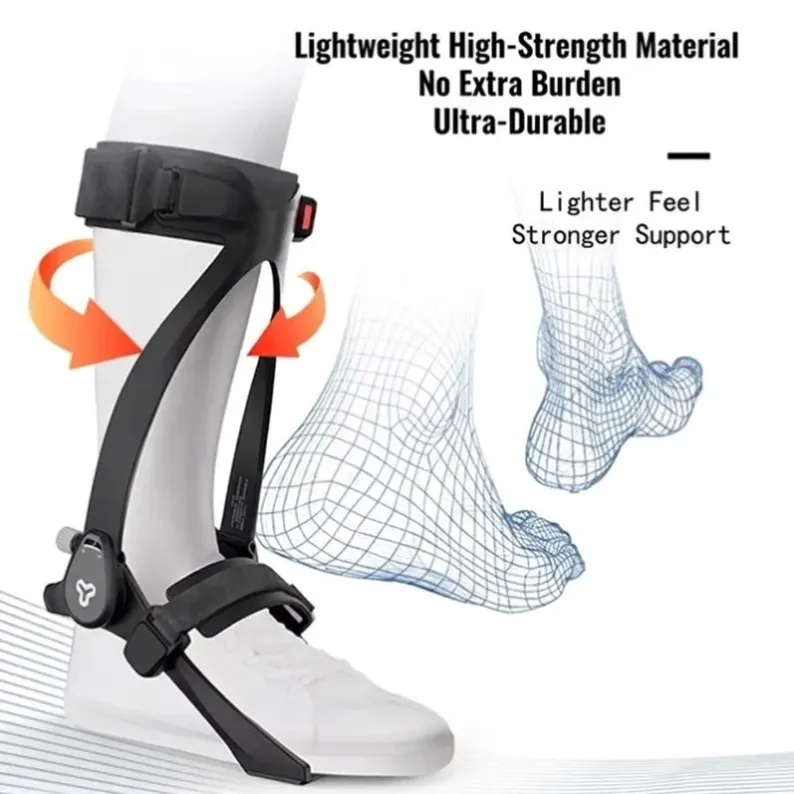
The ACTIVE-STEP AFO worn over the leg and foot. Official product claims: lightweight high-strength material, no extra burden, ultra-durable, lighter feel, stronger support.
Who uses the ACTIVE-STEP AFO, and where?
The ACTIVE-STEP AFO is designed for people whose ankle can no longer hold the foot up during walking. The official product information lists the main indications as foot drop, foot inversion (varus) and foot eversion (valgus) caused by conditions such as:
- Stroke with hemiplegia (cerebral infarction or cerebral hemorrhage)
- Cerebral palsy
- Peroneal (fibular) nerve injury
- Other causes of ankle joint dysfunction that produce an abnormal gait
The image below is the official indications chart: the top row shows the three gait problems the orthosis addresses, and the bottom row shows the cases where it should not be used without a clinician’s assessment.
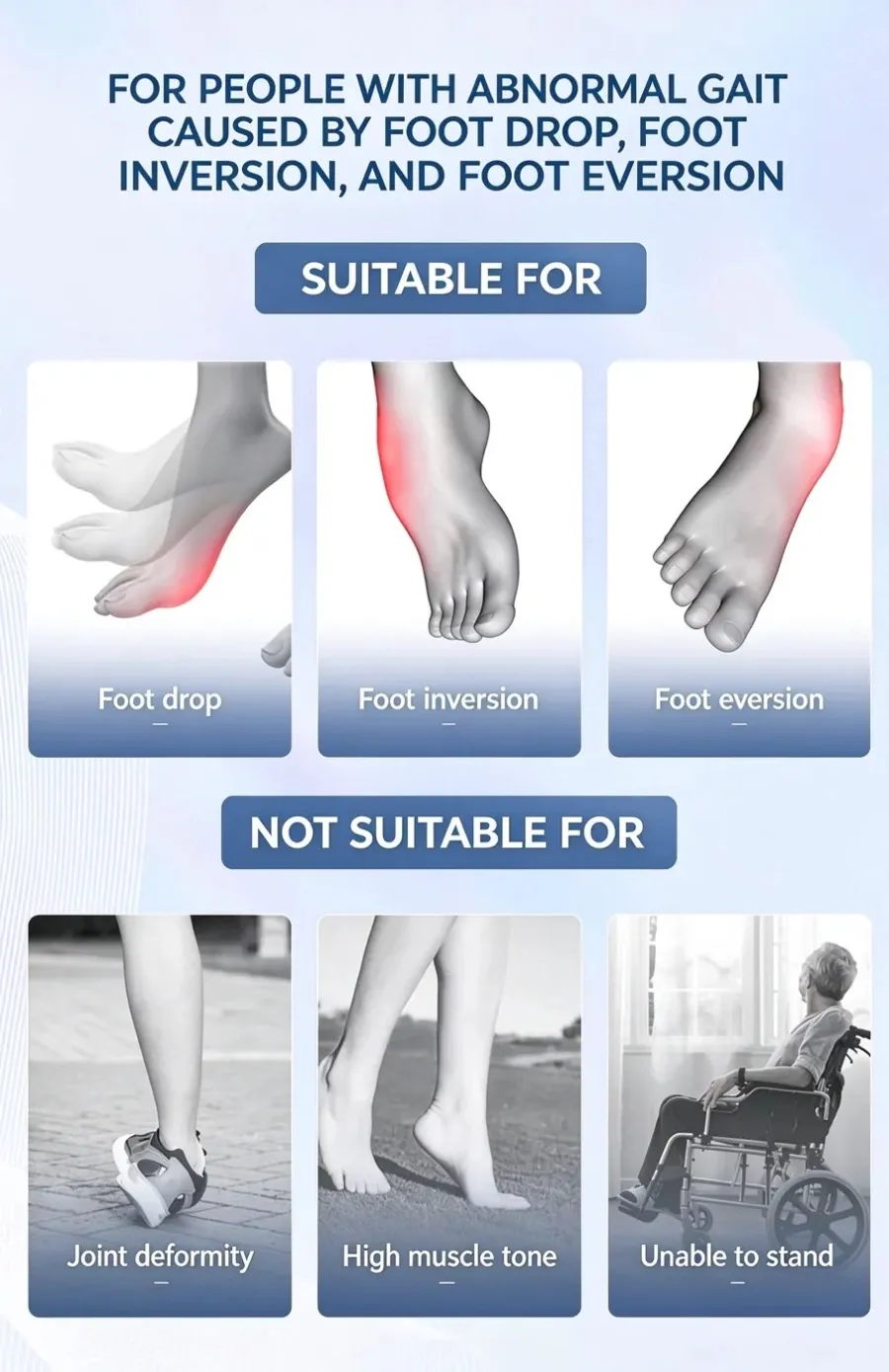
Figure 3. Official indications chart. Suitable for foot drop, foot inversion and foot eversion; not suitable for joint deformity, high muscle tone, or patients who cannot stand.
Where customers actually use it
Because the orthosis works during ordinary walking, it is used across healthcare, senior care and home settings rather than only in a clinic:
- Hospitals and rehabilitation centers — gait training and physiotherapy for stroke and neurology patients during the subacute and recovery phases.
- Senior care and nursing homes — daily mobility support for residents with weak ankle control, mainly to reduce tripping and fall risk when walking on level floors and short outdoor paths.
- Home care — stroke survivors and their families use it for day-to-day walking indoors and outdoors, at home, in the community or while shopping.
- Community and outpatient rehabilitation — therapists issue it as a daily-wear orthosis between training sessions.
- Medical device distributors and importers — procurement teams stocking AFOs for hospitals, pharmacies and rehabilitation supply channels.
It is an active-training, dynamic-rectification device: the wearer walks and the orthosis assists the ankle in real time, so it suits dynamic correction scenarios such as walking, standing up and sitting down. It is not a static resting splint.
Check first: per the official indications, the AFO is not recommended for users with joint deformation, excessively high muscle tone (spasticity), or those who cannot stand. Anyone with these conditions, or any doubt about suitability, should be assessed by a physician or orthotist before use.
What problems does it solve in daily use?
With foot drop, the front of the foot cannot be lifted during the swing phase of walking. The foot drags on the ground, the person compensates by swinging the leg outward (circumduction), and the risk of tripping rises sharply. The before-and-after comparison below is the official demonstration: the left panel shows the uncorrected gait, the right panel shows the same person walking with the orthosis.
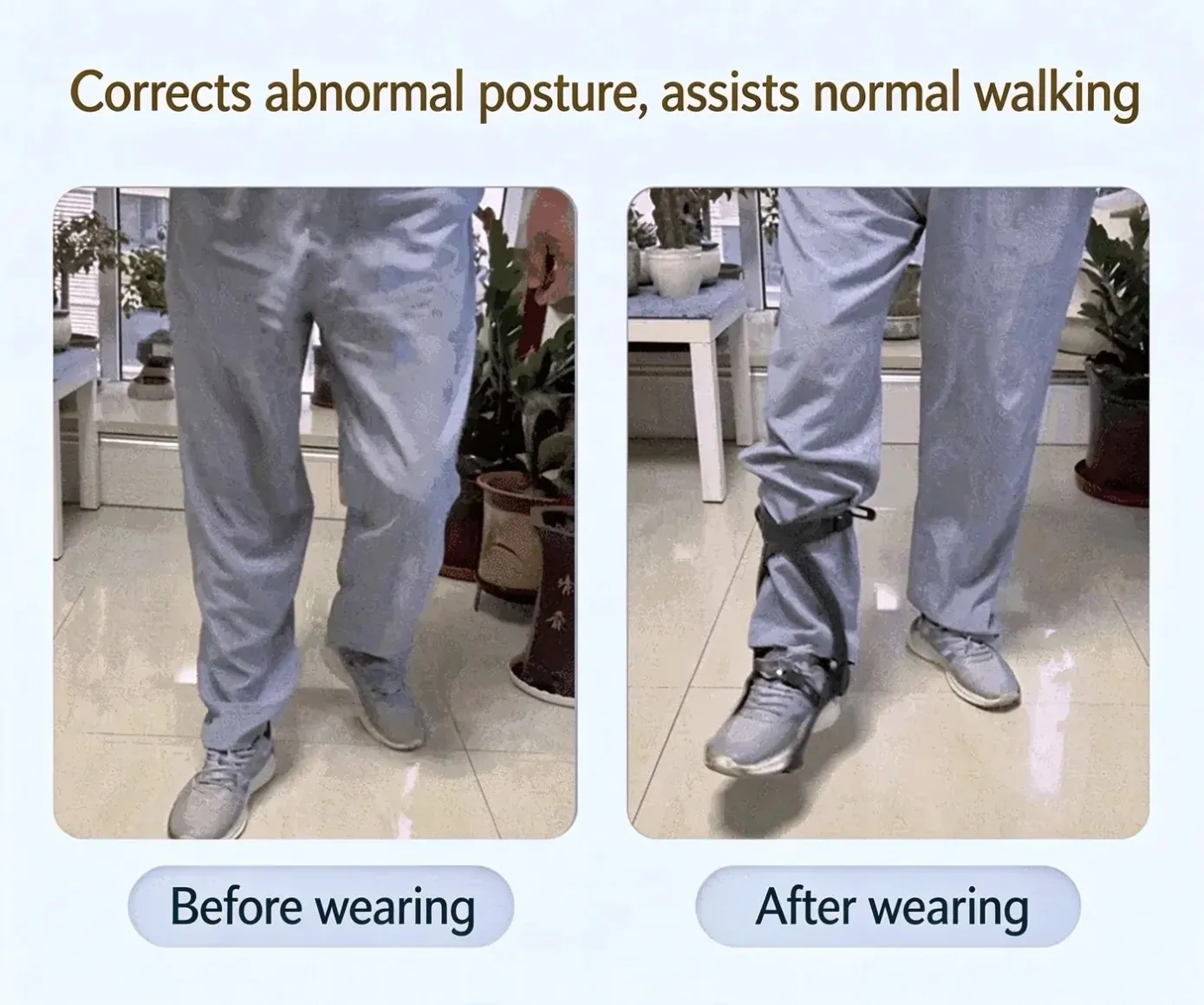
Figure 4. Official before / after comparison: corrects abnormal posture and assists normal walking.
What changes for the wearer:
- Less toe dragging and tripping when walking on floors, paths and stairs.
- More stable stance phase, so caregivers and family members face a lower fall risk during daily transfers.
- Active use of the ankle instead of locking it, which supports the muscle retraining that therapists want after a stroke.
How the ACTIVE-STEP AFO works
Three design choices separate this orthosis from a conventional rigid AFO: a 70° bionic hinge, an open-sole (plantar-open) footplate, and an adjustable assistance mechanism.
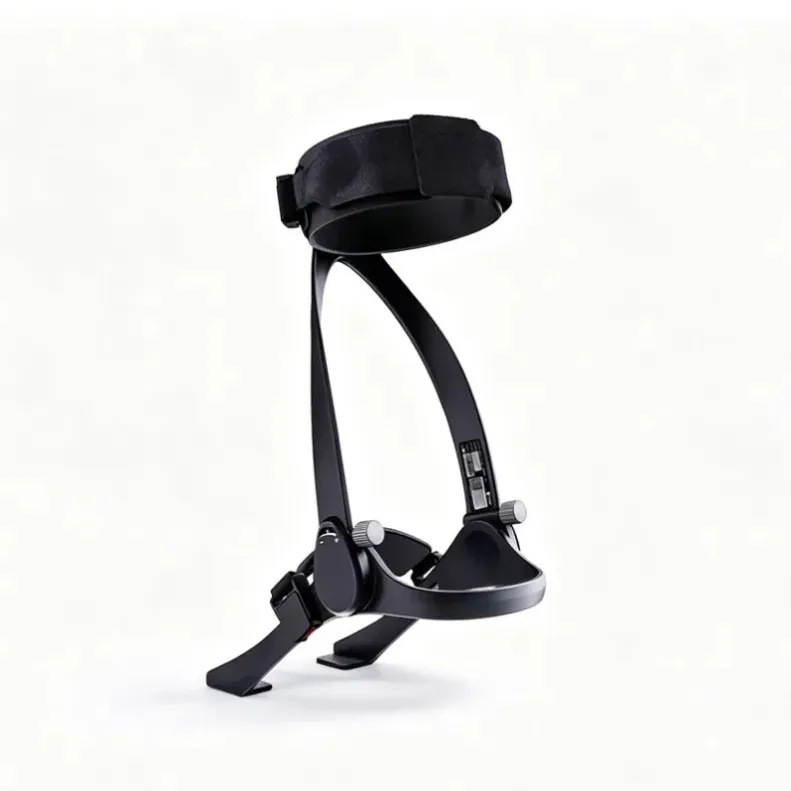
Figure 5. Product anatomy: calf strap, upper and lower brackets, the adjustable assistance area, foot strap, and the open footplate.
A 70° hinge that lets the ankle move naturally
The bionic joint hinge supports a natural range of movement of about 70°. Instead of locking the ankle into one fixed angle, it follows the ankle as it moves, which keeps the gait closer to normal and lets the calf muscles stay active. The official product image below shows the hinge motion range marked against a shoe.
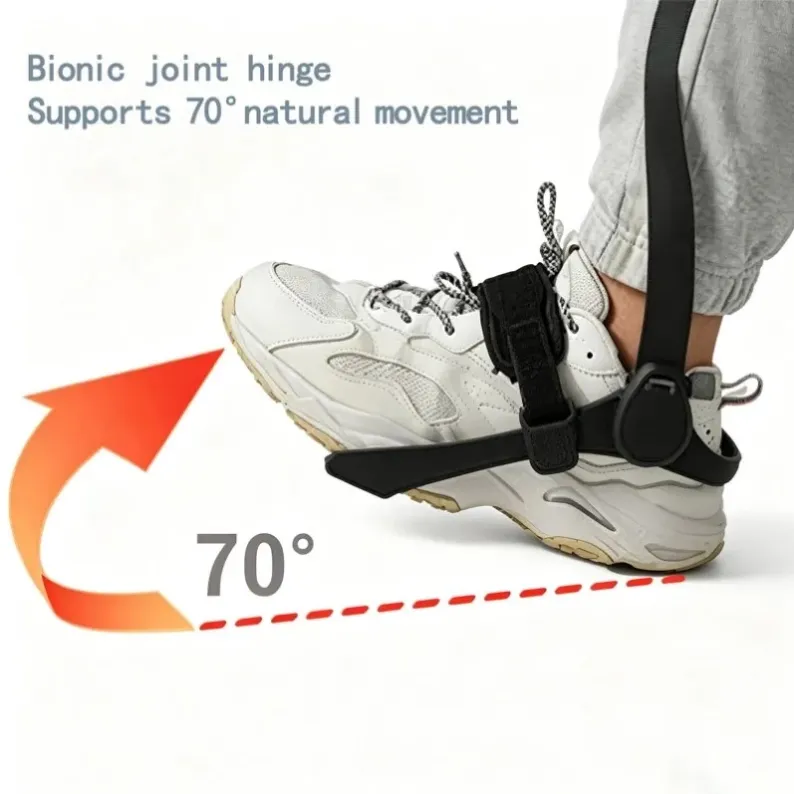
Figure 6. The bionic joint hinge supports 70° of natural movement, so the ankle is assisted rather than locked.
Open-sole design: no oversized shoes needed
The footplate is fully open under the sole. The wearer steps onto the plate with a normal shoe, the sole stays exposed, and ground contact is preserved. That is why the official marketing material describes it as an “uncovered sole for true tactile sensation.” Users keep their own footwear, and there is no need to buy a bigger size just to fit the brace inside the shoe
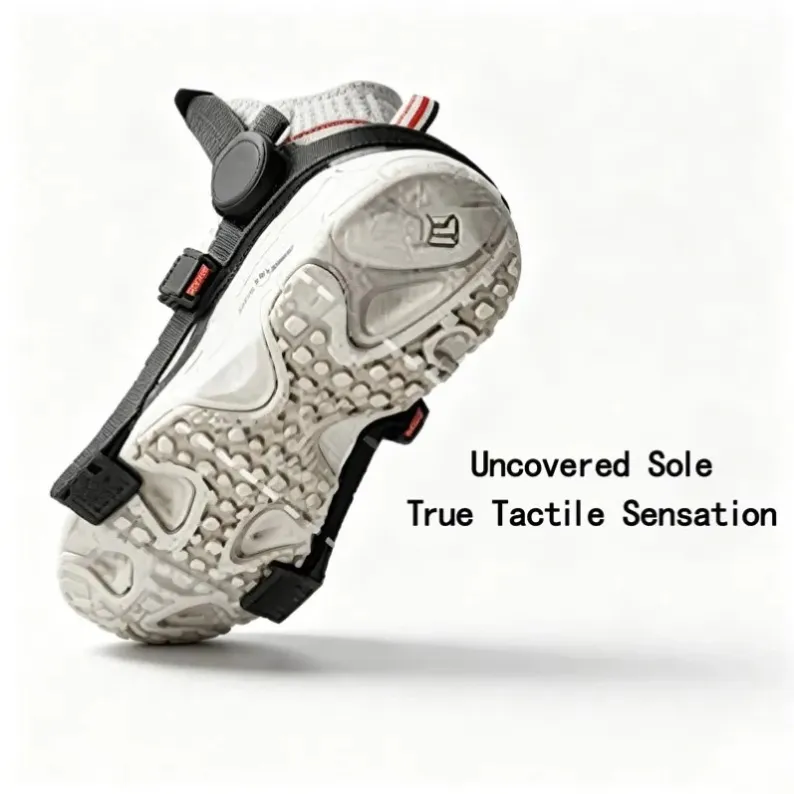
Figure 7. Open-sole design: the shoe sole stays exposed, preserving ground feel and fitting regular shoes.
Adjustable assistance with visual feedback
The support force is adjustable on both sides of the orthosis, and the scale is easy to read so the wearer (or a caregiver) can fine-tune it. The official wearing instructions describe a simple procedure: put the foot in, close the magnetic buckles on the foot and calf straps, then turn the left and right adjustment dials clockwise by about five turns each. In the walk test that follows, if the toe lift is still not obvious, turn the dials a little further clockwise. The same procedure reverses to reduce assistance.
ACTIVE-STEP (Ver 3.0) vs. a traditional inside-wear foot orthosis
The official comparison positions this product as the Ver 3.0 generation. The differences that matter to buyers:
Table 1. Official comparison: ACTIVE-STEP external-wear AFO vs. traditional inside-wear foot orthosis (Ver 2.0)
Factor | ACTIVE-STEP AFO (Ver 3.0) | Traditional inside-wear AFO (Ver 2.0) |
Wearing position | Worn outside the shoe; breathable and comfortable | Worn inside the shoe; can feel hot and pressing |
Sole design | Fully open sole, strong ground feel | Half-open sole, weaker ground feel |
Ankle joint | Bionic dynamic joint, flexible movement | Ankle effectively locked, stiffer gait |
Correction force | Adjustable, on demand, less dependence | Fixed force, easier to rely on passively |
Typical use | Dynamic correction: walking, standing, sitting transitions | Static positioning, e.g. during bed rest |
Putting it on takes about 15 seconds
Donning is one-handed: open the magnetic buckles, slide the foot in from the back, step onto the plate at the widest point of the shoe, close the foot and calf buckles, and adjust. The official figures are about 15 seconds to put on and 5 seconds to take off. Two common mistakes to avoid: stepping on with the plate not flat (the rear bracket touching the ground), and closing the calf strap before the foot strap.
Size range: the official sizing table and how to choose
The ACTIVE-STEP AFO is available in two sizes, S and M. The official size recommendation maps shoe size, foot length and body height to the correct model:
Table 2. Official size recommendation for the ACTIVE-STEP AFO
EU shoe size | Foot length (mm) | Height (cm) | ACTIVE-STEP size |
34 and below | — | — | Not applicable |
35–37 | 225–240 | 150–165 | S |
38–40 | 240–255 | 160–175 | S |
41–43 | 255–265 | 170–185 | M |
44 | 265–270 | 175–190 | M |
45 and above | 271+ | 191+ | Not applicable for ACTIVE-STEP |
Official product dimensions and net weight:
Table 3. Product dimensions and weight (official)
Specification | Size S | Size M |
Product size (mm) | 195 × 137 × 237 | 215 × 145 × 257 |
Package size (mm) | 224 × 146 × 261 | 243 × 154 × 282 |
Net weight | Under 350 g | Under 380 g |
How to choose: measure the wearer’s foot length and check the normal EU shoe size they wear. When foot length and shoe size fall in different rows, use the longer foot length and confirm with the sales team. The AFO is worn on one foot, so order per affected side; if both feet need support, order two units. For feet above EU 44, the official table marks the ACTIVE-STEP as not applicable — the inside-wear (Ver 2.0) foot orthosis covers the larger range; for feet below EU 35, neither model is listed as applicable, so confirm the alternative with the sales team.
Materials, weight and durability
The official product information lists the main material as high-strength composite, with a skin-friendly elastic fabric for the straps and binding. The material package is what keeps the orthosis light while it holds the ankle.
- Weight: under 350 g (S) and under 380 g (M), light enough for all-day wear without adding a noticeable load to the leg.
- Pressure comfort: the upgraded flexible fabric was tested in an 8-hour wear trial with no pressure marks left on the skin.
- Durability: the hinge passed a life test of more than 1.65 million cycles, which is the official endurance figure published for the mechanism.
- Surface feel: the official product claims include “lightweight high-strength material, no extra burden, ultra-durable, lighter feel, stronger support.”
On footwear, the official guidance recommends casual sneakers and flat shoes. It advises against laceless slip-on shoes, leather shoes and thin-soled cloth shoes, because a firm heel and stable sole give the footplate the hold it needs.
Production capacity and customization (OEM/ODM)
The ACTIVE-STEP AFO is developed and exported by DiaComfort Health (Quanzhou Diacomfort Health Industry Co., Ltd.), an OEM/ODM manufacturer based in Quanzhou, China, which develops and produces senior care and rehabilitation products for global buyers. The official company information states:
- Quality control: a strict 10-step quality control process with full traceability across manufacturing lines.
- Customization: modular OEM/ODM scalability — private labeling, packaging design, specification variants and mixed size runs are handled at the factory.
- Export readiness: FBA-ready packaging for e-commerce distributors, plus standard export documentation.
- Delivery and warranty: the site lists delivery in about 7 days after payment and a 1-year warranty with free parts within the first year.
Product development, tooling and production are managed in-house at DiaComfort Health. Buyers who need a full product sheet, MOQ and lead time should request them from the sales team, since these figures depend on configuration and destination.
Buyers’ most common questions before ordering
1. Is the ACTIVE-STEP AFO suitable for stroke patients with foot drop?
Yes. Stroke with hemiplegia (from cerebral infarction or hemorrhage) is one of the official target groups, together with cerebral palsy and peroneal nerve injury. The exclusions are joint deformation, excessively high muscle tone, and inability to stand — in those cases a clinician should assess the user first.
2. Can the user keep wearing their own shoes?
Yes. The orthosis is worn outside the shoe and the sole stays open, so no upsize is required. The official guidance recommends casual sneakers or flat shoes, and advises against laceless slip-ons, leather shoes and thin-soled cloth shoes.
3. What sizes are available?
Two sizes: S fits EU shoe sizes 35–40 (foot length 225–255 mm) and M fits EU 41–44 (foot length 255–270 mm). EU 34 and below, and EU 45 and above, are outside the ACTIVE-STEP size range per the official table.
4. Is it for the left foot or the right foot?
One unit is worn on one foot. Order for the affected side; if both feet need support, two units are required. Tell the sales team which side(s) you need so the order is clear.
5. Can the support force be adjusted?
Yes. There are adjustment dials on both sides with a readable scale. The official instructions start at about five clockwise turns per side and then use a walk test: if toe lift is not obvious, continue turning clockwise. Less assistance means turning back.
6. Is it heavy to wear all day?
No. Net weight is under 350 g for size S and under 380 g for size M. The hinge is life-tested beyond 1.65 million cycles, and the flexible fabric was tested in an 8-hour wear trial without pressure marks.
7. What warranty and after-sales support come with the product?
DiaComfort Health lists a 1-year warranty with free parts within the first year, and delivery in about 7 days after payment. For distributor orders, confirm the warranty terms, spare-parts policy and replacement procedure in your contract.
8. Can we order with our own brand, packaging and size mix (OEM/ODM)?
Yes. DiaComfort Health is an OEM/ODM manufacturer with 10-step quality control and FBA-ready packaging. Private labeling, packaging design and mixed size runs are standard requests; MOQ, lead time and documentation are confirmed at quotation.
What to prepare before sending an inquiry
A complete inquiry lets the sales team quote correctly on the first reply. Include:
- Target users: the condition (foot drop, stroke, nerve injury), age range and any contraindications you know of.
- Quantity and sizes: expected order volume, and the S/M mix or per-size breakdown.
- Customization: logo/branding, packaging, user manual language, or any specification variants.
- Destination: the destination country or region, so the team can advise on local import requirements.
- Timeline: target delivery date, so the team can confirm capacity and lead time.
Ready to compare it against your current AFO supplier?
View the full product page with the official image gallery, or contact the DiaComfort Health sales team for the product sheet, MOQ, sample policy and quotation.
View the ACTIVE-STEP AFO product page: https://www.diacomforthealth.com/products/active-step-afo-ankle-foot-orthosis · Contact the sales team: https://www.diacomforthealth.com/contact-us · Product catalog: https://www.diacomforthealth.com/products · About DiaComfort Health: https://www.diacomforthealth.com/about-us
Sources: Sources: figures in this article are taken from the official ACTIVE-STEP AFO product page on diacomforthealth.com, the official DiaComfort Health About and Products pages (OEM/ODM, 10-step QC, FBA packaging, delivery and warranty terms), and the official product information sheet for the Reflex-ANK ankle trainer (size table, dimensions, net weight, materials, wearing and adjustment instructions, life test and fabric test).
This guide is for procurement reference. For individual users, the final decision on suitability should be made with a physician or orthotist.